


Handrail Brackets
Versatile handrail brackets for complete modular systems. Choose wall- or post-mounted designs in satin stainless steel or black matte, with mounting options for wood or steel studs, flat or round steel posts, concrete or masonry, and glass. Pair them with matching round or square tubing and fittings from our Handrail Parts collection.
How many Handrail Brackets do I need?
Use a maximum design span of 39 inches between bracket attachment points. To estimate the number of brackets for a straight run, divide the supported handrail length in inches by 39, round up to the next whole number of spaces, and then add one bracket. For example, a 120-inch run requires four spaces and at least five brackets.
The current handrail-profile calculations use a 200 lb concentrated transverse load at midspan and assume 16-inch-on-center wall studs and a 35° stair angle. Actual bracket locations must connect to suitable framing or blocking with fasteners appropriate for the mounting surface. Confirm the bracket model, handrail material, substrate, and applicable local requirements before installation.
Why Choose Inline Design Handrail Brackets?
Handrail systems are our specialty. Mix and match brackets, tubing, and fittings within one coordinated family.
-
Versatile mounting
Configure many core bracket designs for wood studs, steel studs, flat or round steel posts, concrete or masonry, and glass. Match flat or round saddles to the handrail profile. View mounting options. -
Meticulous engineering
Choose slim, adjustable, heavy-duty, wall-mounted, or post-mounted designs developed for precise fit, alignment, adjustability, and secure connections. -
Complete black and stainless systems
Pair satin stainless or black matte brackets with round tubing or square tubing in stainless steel or black matte aluminum. Finish the system with matching handrail parts—elbows, joiners, end caps, wall returns, flanges, adapters, and mounting hardware.
Pinch Grip vs. Power Grip: Why Graspability Matters
A handrail should support a secure power grip, allowing the fingers and thumb to wrap around the gripping surface. A pinch grip relies mainly on the fingertips and provides less control when a person needs the rail for stability.
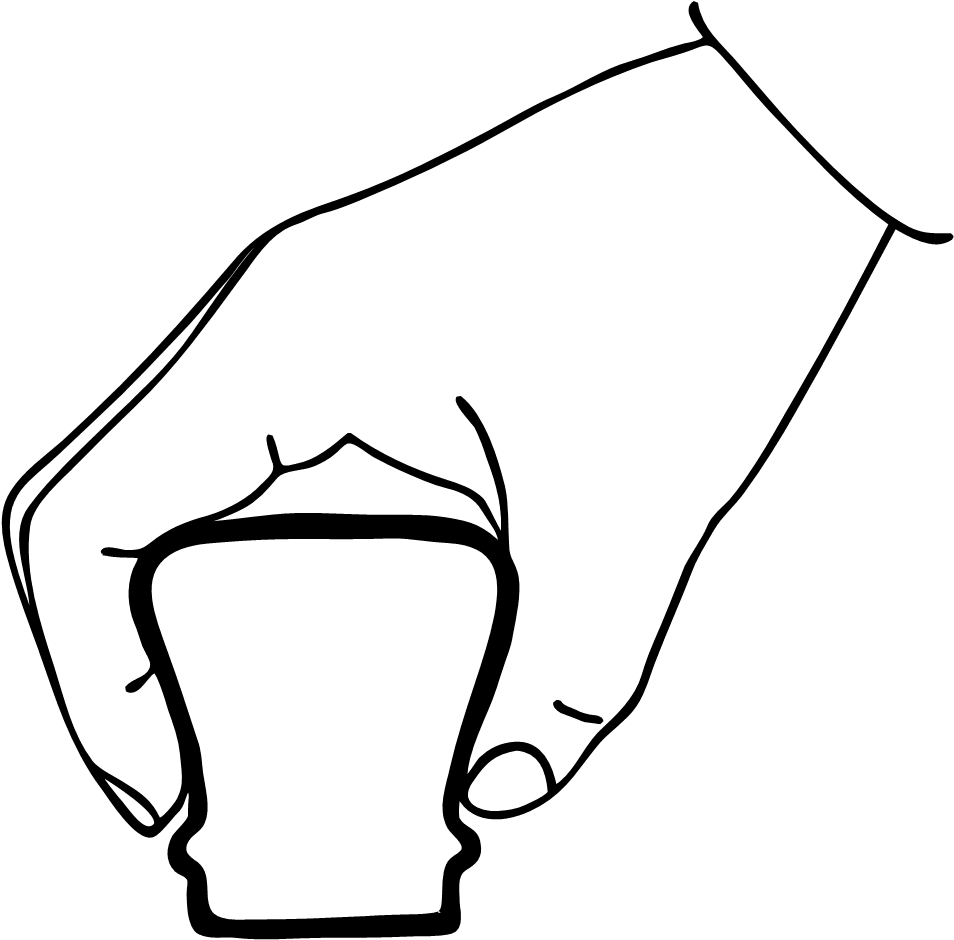
Fingertips make most of the contact
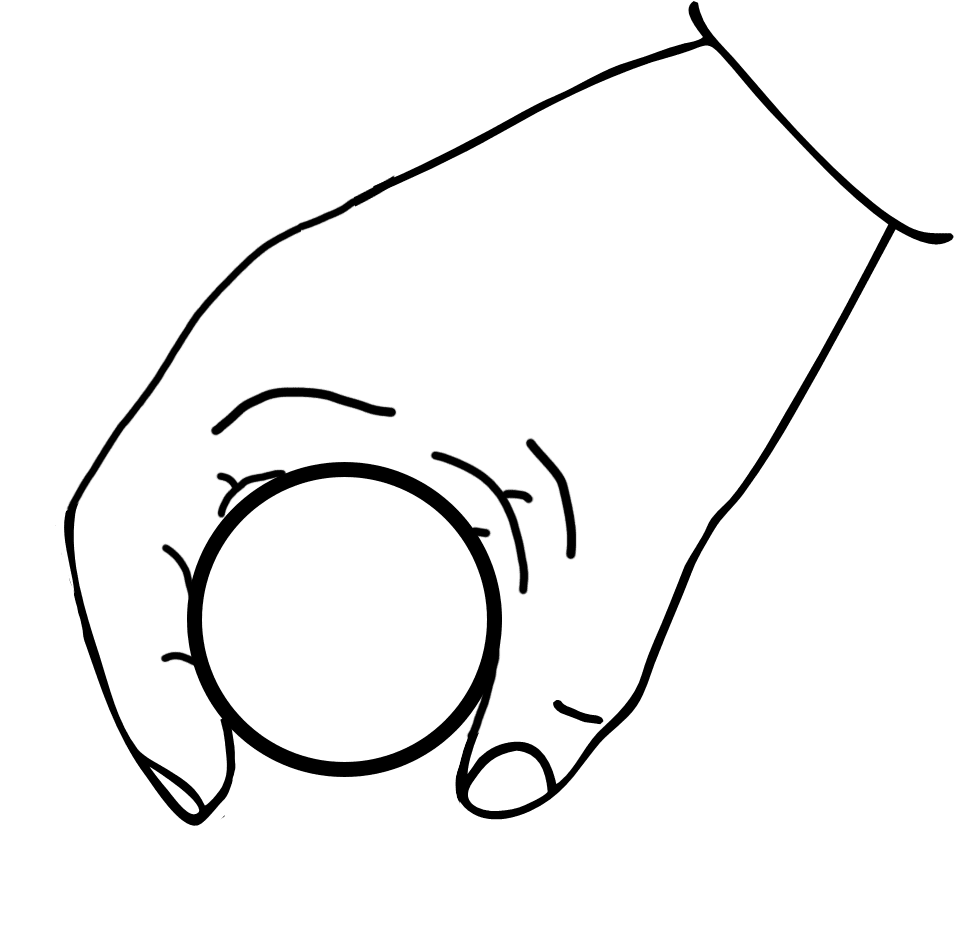
Fingers and thumb wrap around the rail
Accessibility depends on the complete installed handrail, including its profile, clearance, continuity, and possible obstructions. For circular handrails, ADA Standards §505.7.1 specifies an outside diameter of 1¼ to 2 inches; non-circular profiles have separate dimensional requirements. Review the official ADA handrail standards when planning an accessible installation.
Residential Handrails & Guards
Handrails and guards serve different safety functions. A handrail provides a continuous, graspable surface along stairs, ramps, or walking surfaces. A guard protects an open edge. A guard can incorporate a handrail, but one does not automatically satisfy the requirements of the other.
-
Design the complete assembly
The bracket is only one part of the system. Confirm the handrail profile, support spacing, wall clearance, continuity, returns or extensions, mounting substrate, fasteners, and structural backing as a complete installation. -
Accessibility depends on the installation
ADA requirements apply to the geometry and performance of the complete installed handrail—not to a bracket by itself. Review the official ADA handrail standards when planning an accessible installation. -
Project requirements vary
Applicable rules depend on the project location, occupancy, use, and governing code. Confirm the final design with the local building official or qualified design professional before fabrication or installation.
For additional planning information, see our Handrail Design Guidance and Handrail Height Guidance.


